
my thoughts on ai, as told through my various opinions on ai through time

introduction
Since ""AI"" (I'm going to start referring to separate kinds of ""AI"" as LLMs for text generative services and procedural image generators for image generative services because I have no respect for the term artificial intelligence) has become a big thing, I've gone through a few phases in terms of my overall opinion of them.
1) middle school and a fun app
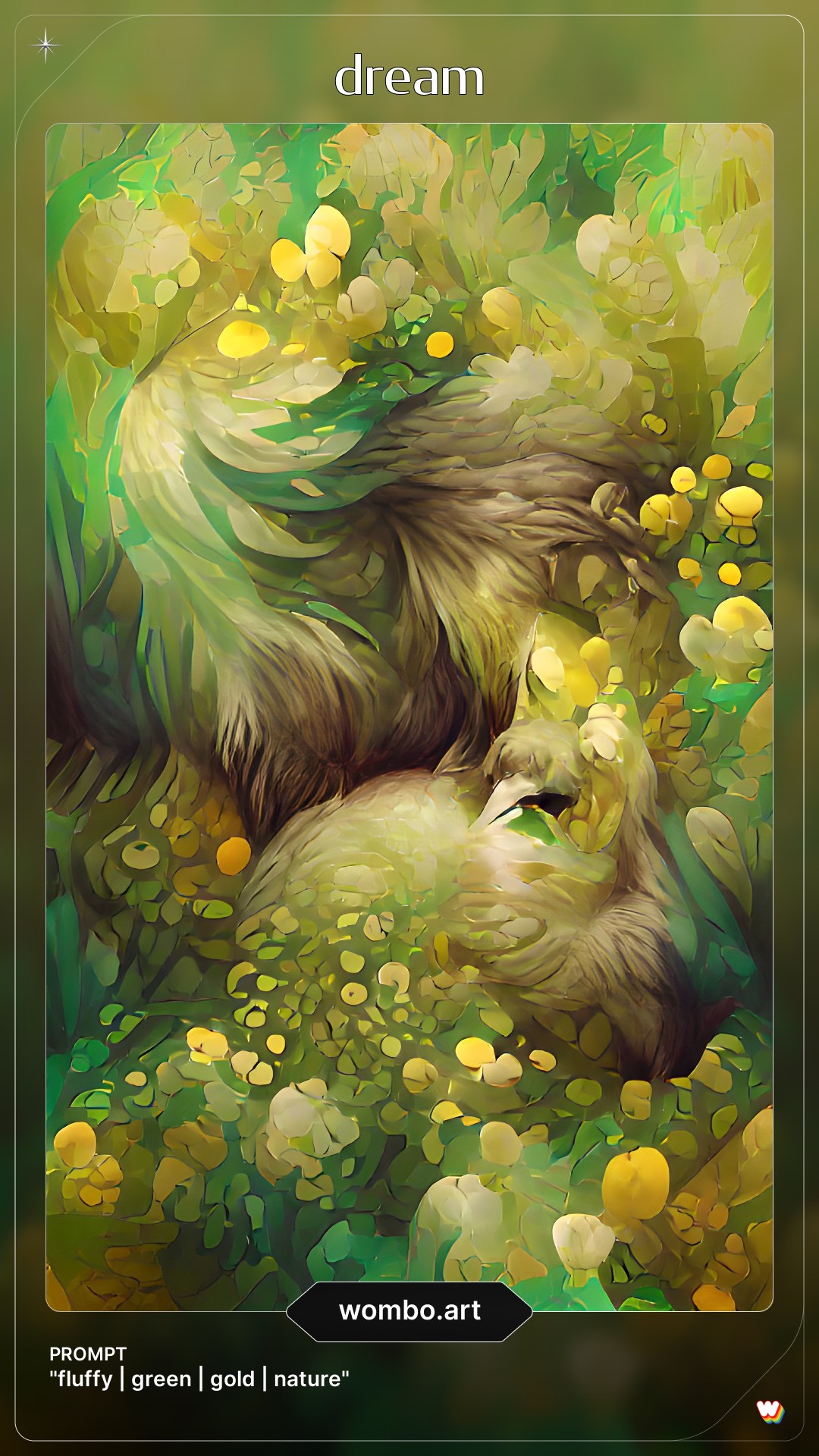
an image i made for a wallpaper
When procedural image generators first became popular, they couldn't generate much more than shapes and colors and I thought that they were fascinating. I remember that at one point, I went around asking people on random Discord servers if they wanted me to make them phone backgrounds using procedurally generated images.
I don't exactly "miss" this period of generative ai, I certainly believe that it was one of the most inoffensive and potentially transformative periods. At this point, the models didn't know how to make solid shapes, and so everything that was spit out was, as seen here, amorphous and often quite pretty. This process is at least somewhat transformative, because it takes images and creates a sort of intricate collage, melding them together in odd and new ways, instead of trying to create a perfect average. If I could recover this app, I think I would, it was fun.
2) middle school and chatgpt
When ChatGPT was popularized, I first learned about it through one of my school teachers, who glazed it relentlessly. He explained how it was an incredible translation machine, especially between Latin and non-Latin languages. He had us play around with it in class, including asking it to create scripts for short skits, including one of the funniest videos I have on my phone, of seven of the guys in that class acting out a skit about "Seven Dudes in a Hot Tub." I asked it to write some things, mostly fantasy stories and in the style of particular authors, and I was honestly thoroughly underwhlemed, and didn't use it or think about it much for like a year.
I think this was the most hopeful era of ""AI"", in which people like that teacher saw that there was a lot of potential in the translational abilities of the service, and it was a fun little gimmicky thing. Even at that point, though, the computational resources needed to run an LLM were immense, and the abilities of LLMs like ChatGPT to provide useful services does not justify the disproportional guzzling of resources to run. Human translators exist, and Google Translate is serviceable in many situations, and neither represent such an incredible strain on natural resources in comparison to the relatively insignificant services they provide.
3) tumblr, art, and anti-ai
When various LLMs and procedural image generators began to really explode in popularity, I was still a Tumblr user, and my exposure to the creative side of Tumblr naturally made me incredibly hateful towards AI. Because of the way that the companies behind LLMs and procedural image generators started scraping the web for human-made writing and imagery, the people behind that writing and those images began speaking out fervently against such predatory practices. I do not believe that they're wrong; it is very wrong for companies to take advantage of people shariing their creative expressions online, much less without evven notifying them. Much of the conversation, however, revolved around copyright, which is a long-had debate surrounding ""AI"".
AI generated material is not copyrightable material. There are several large corporations and even individual people who believe that the content generated by ""AI"" is copyrightable, somehow deserving of intellectual protection, when in fact there is nothing intellectual about generative programs. The output of these programs is completely computer-made, pulling *entirely* on existing artwork, is not transformative in any way, and cannot be protected in the same lane as other creative works. A lot of the debate around generated content, however, takes the stance that anything not generated by ""AI"" can and should be copyrighted, partially with the goal of preventing any works from being taken and used to train a model without the consent of the creator. This is also harmful. Copyright intrinsically exists to allow people and companies to disallow other people from making profit off of ideas that they don't own, which is fine and dandy when in the world of profit, but not when considering artistic pursuits. Art is inherently transformative, it must take ideas that already exist but also changes those ideas into something new. Copyright protects the artist selling prints of their work from losing profit to someone else who has ripped their art and is selling identical prints, but cripples the songwriter who wants to explore a new way to arrange an old melody. There is also an argument to be made that copyright only protects corporations, which is a very good argument, but I don't want to make it here.
returning to the previous topic
Because of this, I learned pretty early on about movements to protect online artists from bots scraping their images with programs like Glaze and Nightshade. For a period, I even used strategies like that, including putting a very transparent layer on all my artwork with a disturbance pattern before I uploaded it, but I eventually gave up because I had heard about scrapers just denoising their images and it didn't seem worth the effort any more.
The generative programs that existed around this time were becoming more and more believable, beginning to generate hands with five fingers and correctly-proportioned scenes, although video generation was still extremely goopy and unconvincing. This was, I believe, the most useless phase of generated imagery; before this, the odd and shapeless output of popular programs were novel, interesting, and unique, and after this point, the output had a place (if a horrific and dystopian place) as a stand-in for actual, human-made content. In this era, however, these images were simply significantly worse versions of human-made content. Also around this time
4) stem and a softening
When I entered high school, I joined a FIRST Robotics Competition team, and that environment was full of upper-middle-class, technology oriented students and adults. It's a positive environment for me, but many of the people there have neutral or positive views of generative programs, which is very different from what I'd experienced in online spaces up til then, and although my current stance is very negative I think it was good for me to see that perspective.
In terms of LLMs, students and adults alike on the team expressed neutrality towards the idea, and called it a tool that could be used for good or bad things. Some students used it like lots of students do, to write papers for them, or just to generate ideas, and adults used it to aid all sorts of kinds of brainstorming, from name ideas to code debugging. In contrast, procedural image generators get much less attention, but were sometimes used as a joke, to say "hey look at this funny thing that ai made when i told it to make this," and these attitudes slowly changed my attitude to a more neutral one: ""AI"" is a tool, it's neutral in and of itself, etc. I remember saying, "I believe that AI can be a good tool, but at the moment it's just too awful to be actually useful in pretty much any scenario." I think I was missing some things then, and by now that second part is flat out wrong.
5) "modern" generative programs and some key youtube videos
My current beliefs about generative programs is very, very negative. After a while of spending my time around these people who believe that generative programs are fun gimmicky tools, some who use them regularly as a second brain, I eventually stumbled across a series of YouTube video essays made by different kids of artists that explain why these programs damage the artistic process in fundamental ways. Around this time I also started learning about the ways that the facilities that these programs need to run physically damage the communities around them.
the physical drawbacks
I will admit, I am not extremely knowledgeable about the environmental impact of the server banks that are used to run generative programs, but there are some things that I know, and so I'll share them here. First, these centers absolutely guzzle water. I have heard of communities being asked to conserve water as ""AI"" corporations purchase as much water as they want. They also suck up electricity and are an extremely heavy burden on local electricity grids. Incredibly, the datacenters can also cause physical diseases through the low-frequency sound they emit at high decibel.
the social drawbacks
one of the key youtube videos
Procedurally generated images are not art. Procedurally generated images are just that; a piece of content created through an algorithmic process that systematically creates the most average version of an image. Procedurally generated images contain no interpretation if the world, no influence by the human hand, and no prompts absolutely do not count. The widespread acceptance of procedurally generated images is a further deterioration of the cultural interpretation of the word "art" further into a practice disconnected from humanity, rather than an intrinsic part of it.
another one of the key youtube videos, explaining ai entropy better than i ever could, go watch it
conclusion
In conclusion, fuck ai. We deserve better than a procedural average finder that is built to deceive us into seeing intelligent thought where there is none. Stay sane out there.